
Urinary
Urinary Tract Infections
UTIs affect the bladder, urethra and kidneys in men and women. Prompt diagnosis and the right antibiotics resolve most UTIs completely.
Read more →Medical Expertise You Can Trust
About the doctor →The consultant who assesses you is the one who treats you — a specialist, not a technician.
Endourology, laser and keyhole techniques for faster recovery and less discomfort.
No unnecessary tests or medicines. If a treatment won't help, you'll be told.
Consults across three locations in Ashok Vihar, Rohini and Karol Bagh.
Every plan starts with a proper assessment, so you get exactly the care your condition needs — and nothing it doesn't. From common urinary infections to complex uro-oncology, treatment is explained clearly and delivered with modern techniques, focused on getting you back to normal life quickly. And if the honest answer is that you don't need a procedure, you'll hear that too.
What We Treat
Not sure where to start? Begin with what's bothering you — we'll explain what a urologist would actually recommend, never a set menu of procedures.
View all conditions →UTIs affect the bladder, urethra and kidneys in men and women. Prompt diagnosis and the right antibiotics resolve most UTIs completely.
Read more →Stones in the kidneys, ureters or bladder. Modern minimally-invasive treatment clears most stones with minimal recovery time.
Read more →An abnormal growth in the bladder lining. Early detection is critical — most early-stage bladder cancers respond well to therapy.
Read more →The inability to achieve or maintain an erection sufficient for sexual activity. Modern treatment is safe, discreet and effective in most cases.
Read more →Common in men over 50 and often curable when caught early. Diagnosis combines PSA, MRI and targeted biopsy; treatment up to robotic prostatectomy.
Read more →Non-cancerous prostate enlargement (BPH) obstructs urine flow. HoLEP, ThuLEP and Greenlight laser offer excellent relief with fast recovery.
Read more →Sudden, hard-to-control urges to urinate. Treatable with bladder training, medication and — when needed — Botox injections or neuromodulation.
Read more →Low testosterone causes fatigue, low libido and reduced muscle mass. Diagnosis is straightforward and treatment is highly effective and tailored.
Read more →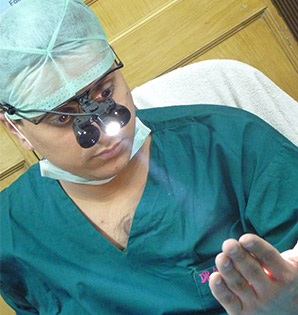
About Dr. Anish Gupta
MBBS · MS · DNB (Urology / Genito-Urinary Surgery)
Dr. Anish Kumar Gupta is a Consultant Urologist and Andrologist with over 20 years of clinical experience. He completed his MBBS at Kasturba Medical College, Manipal (2005), his MS in General Surgery from Mysore Medical College (2009), and his DNB in Urology from St. John's Medical College (2013).
He has a special clinical interest in Pediatric Urology, Andrology and Endourology, and is trained in Uro-Oncology and Pediatric Urology at internationally recognised centres. He currently consults at North Delhi Nursing Home (Ashok Vihar), Jaipur Golden Hospital (Rohini) and Apollo Spectra Hospital (Karol Bagh).
Why Choose Dr. Anish Gupta
Choosing the right urologist makes a real difference. Here's what you can expect when you consult Dr. Anish Gupta.
You are examined and treated personally by Dr. Anish Gupta — not handed over to a junior doctor or an assistant.
More than two decades of treating patients of all ages — from simple urine infections to major cancer surgery.
No fixed packages. Your treatment is planned to suit your problem, your health and your budget.
Advanced laser and keyhole techniques that mean smaller cuts, less pain and a quicker return to daily life.
You are advised only the tests and treatment you genuinely need. If something can wait, or surgery isn't required, you'll be told clearly.
Consistently rated 4.6★ on Google for clear explanations, honest advice and effective, caring treatment.
How It Works
Every treatment starts with a specialist consultation — no pressure, no unnecessary tests. We assess your symptoms, explain what's happening in plain language, and give you a clear plan, including "watch and wait" if that's the honest call.
Locations & Directions
Dr. Anish Gupta consults across three locations in Delhi NCR. Choose the one most convenient for you and call ahead to confirm timings.
3, Community Centre – II, Phase – II, Ashok Vihar, Delhi – 110052
Tue, Wed, Fri, Sat 9:00 AM – 2:00 PM
Mon, Tue, Thu, Fri 4:00 PM – 6:00 PM
2, Naharpur Village Road, Institutional Area, Sector 3, Rohini, Delhi – 110085
Mon, Thu 9:00 AM – 2:00 PM
☎ +91 11 6140 6300Metro Pillar No. 77, Block 34, Plot 3, Pusa Rd, opp. Bal Bharati Public School, Karol Bagh, Delhi – 110005
Wed 3:00 PM – 5:00 PM (By Appointment)
☎ +91 93696 30076Patient Testimonials
Verified Google reviews from patients treated across Delhi NCR.
Latest From The Blog
Articles on common urological conditions, treatments and patient guidance. View all articles →
We use essential cookies to make this site work. With your consent we may also use analytical and marketing cookies. Nothing non-essential runs until you opt in, in line with India's Digital Personal Data Protection Act, 2023. You can change your choice any time. See our Privacy Notice and Cookie Policy.